
G-LegalHub Image Verification Engine
System Online (2026)Click the buttons below to switch between live image previews instantly. Ensure the layout aligns correctly before deploying the HTML payload to your server.
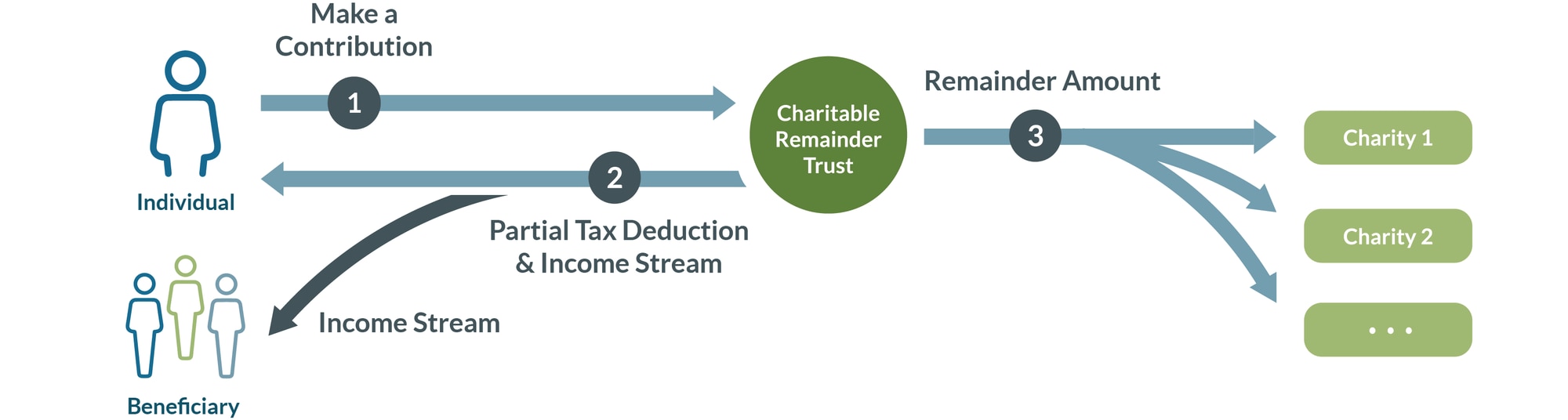
[LIVE PREVIEW] Primary Banner Image: Charitable Remainder Trust Architecture
The 2026 Sunset Legal Guide: Navigating the Tax Cuts and Jobs Act Estate Planning Crisis
An Exhaustive Analysis of the Historic Federal Estate Tax Exemption Collapse, Anti-Clawback Protection, and Advanced Wealth Preservation Architecture
Published: January 28, 2026 | Authorial Team: G-LegalHub Tax & Wealth Advisory Board
1. Executive Summary: The Great Exemption Cliff is Here
The year 2026 marks the most volatile structural inflection point in American estate tax history since the enactment of the Tax Cuts and Jobs Act (TCJA) of 2017. For nearly a decade, high-net-worth individuals, business owners, and multigenerational families have operated within a hyper-inflated estate tax safety net, with federal exemptions climbing past $13.6 million per individual. However, under the strict legislative design of the TCJA, those historic wealth protections have hit their statutory expiration date.
As we navigate 2026, the temporary enhancement to the unified estate and gift tax exclusion has officially **sunsetted**, reverting the baseline threshold to its pre-2018 standard, indexed for inflation. This structural cliff has effectively halved the amount of wealth an individual can transfer tax-free, exposing thousands of affluent American families to a crushing **40% federal transfer tax** on assets they previously believed were completely insulated from the Internal Revenue Service (IRS).
This master guide delivers a definitive, technically rigorous legal audit of the 2026 sunset. It details the precise numerical impact of the exemption collapse, clarifies the IRS's official anti-clawback parameters, outlines the essential lifetime gifting strategies required to lock in disappearing exemptions, and breaks down advanced irrevocable vehicles like SLATs, GRATs, and ILITs.
2. Anatomy of the Sunset: The Exemption Breakdown
To conceptualize the systemic shift facing American estates, one must audit the exact statutory mechanics driving the exemption contraction. The TCJA did not permanently rewrite the internal revenue code regarding transfer exemptions; instead, it merely doubled the base exclusion amount from $5 million to $10 million, subject to annual inflation indexing, strictly through December 31, 2025.
On January 1, 2026, that doubling mechanism expired. The baseline exclusion returned to a flat $5 million per individual, which, when properly calculated with cumulative cost-of-living inflation adjustments through 2026, positions the active exemption at approximately **$7 million to $7.3 million per individual** (roughly $14 million to $14.6 million for a married couple utilizing portability).
The sophisticated structural chart below illustrates the standard multi-share trust architecture required to segment assets cleanly between family and marital trust lines, helping to navigate these reduced state and federal parameters without triggering immediate tax exposure.
----The 2026 Sunset Legal Guide: Navigating the Tax Cuts and Jobs Act Estate Planning Crisis
 |
| Advanced 3-Share Trust Architecture for Post-Sunset State and Federal Exemptions. Source: Adler & Adler, PLLC |
The 40% Operational Penalty
For families whose wealth profiles sit between the old peak of $13.99 million and the new post-sunset base of ~$7 million, the economic consequences of failing to plan are severe. Every dollar of asset valuation over the active exemption limit is hit with a flat **40% federal estate tax rate** upon the owner's death.
Furthermore, because the estate tax is due in cash within nine months of the date of death, families with highly illiquid assets—such as commercial real estate holdings, private family firms, or agricultural land—are often forced into rapid, distressed asset liquidations simply to satisfy the IRS tax demand, destroying multigenerational business continuity.
The IRS Anti-Clawback Safeguard: Treasury Decision 9880
For years, a massive legal concern haunted the wealth advisory community: If an individual utilized their maximized $13 million exemption by making large lifetime gifts prior to the sunset, would the IRS "claw back" those taxes after 2026 if the individual passed away when the exemption was only $7 million?
To resolve this structural panic, the Department of the Treasury and the IRS issued final regulations under **Treasury Decision 9880 (Treas. Reg. § 20.2010-1(c))**. This historic ruling established an ironclad "use-it-or-lose-it" anti-clawback rule. The IRS explicitly confirmed that individuals who executed large, completed lifetime gifts maximizing the pre-sunset exemption thresholds would *not* face a retroactive tax penalty at death if the exemption later contracted.
Crucially, however, the rule only rewards those who actually used the enhanced limits. If an individual did not execute completed lifetime transfers that exceeded the new base threshold before the sunset deadline, those enhanced allocations vanished permanently, leaving their estate bound by the lower limits.
3. High-Value Gifting Strategies vs. Post-Sunset Caps
The strategic response to a contracting tax perimeter is the aggressive deployment of lifetime gifting strategies. By systematically removing appreciating assets from your personal estate during your lifetime, you accomplish two critical tax objectives: you absorb the high exemption limits while they remain active, and you ensure that all future market appreciation on those assets occurs completely outside your taxable estate.
| Gifting Mechanism | 2026 Statutory Parameters | Strategic Tax Objective |
|---|---|---|
| Annual Exclusion Gifting | Indexed to **$18,000 per donee** ($36,000 for married couples utilizing gift-splitting). | Allows systemic, year-over-year wealth reduction without reducing your lifetime unified exemption cap. |
| Medical & Educational Bypasses | **Unlimited.** Must be paid directly to the institutional provider (IRC § 2503(e)). | Removes massive blocks of capital tax-free by paying tuition and medical bills directly to schools/hospitals. |
| Completed Lifetime Gifts | Capped at the post-sunset unified limit (~$7.1M per individual). | Locks in asset valuations during market lows and pushes all future asset appreciation to the next generation. |
| Portability Elections | Requires timely filing of **Form 706** by the surviving spouse within statutory windows. | Allows a surviving spouse to capture and utilize the unused deceased spousal case exclusion (DSUE). |
4. Advanced Irrevocable Vehicles: The Wealth-Locking Blueprint
Because simply gifting millions of dollars in cash directly to children or grandchildren can cause extreme financial disruption, asset protection vulnerabilities, and family governance chaos, affluent Americans must utilize highly specialized, irrevocable trust structures. These vehicles allow settlors to absorb their unified exclusions while maintaining tight operational boundaries over how those assets are managed and distributed.
1. The Spousal Lifetime Access Trust (SLAT)
The **SLAT** has emerged as the premier vehicle for married couples navigating the post-sunset reality. A SLAT is an irrevocable trust created by one spouse (the grantor) for the explicit lifetime benefit of the other spouse (the beneficiary spouse) and their children. The grantor utilizes their available lifetime exemption to fund the trust with appreciating assets, successfully moving those assets out of their gross estate.
The unique operational benefit of a SLAT is that it allows the family to maintain **indirect access** to the capital. Because the beneficiary spouse can request discretionary distributions from the independent trustee for health, education, maintenance, and support (HEMS), the family balance sheet retains a vital liquidity valve. However, planners must navigate the strict **Reciprocal Trust Doctrine**; if both spouses create identical SLATs for each other, the IRS will un-wind both structures and drag the assets back into their taxable estates, requiring distinct drafting structures and different trustees for each vehicle.
2. The Grantor Retained Annuity Trust (GRAT)
A **GRAT** is an advanced, high-velocity wealth transfer vehicle designed specifically for rapidly appreciating assets like pre-IPO stock, high-yield tech portfolios, or private corporate equity. The grantor transfers these assets to an irrevocable trust in exchange for a mandatory, multi-year stream of annuity payments back to the grantor. The value of these annuity payments is calculated using the IRS **Section 7520 hurdle rate**.
If the underlying assets inside the GRAT outperform the Section 7520 hurdle rate during the trust term, all of that excess market appreciation transfers to the remainder beneficiaries (such as children or sub-trusts) with **zero gift tax exposure**. A properly structured "Zeroed-Out GRAT" allows a grantor to move millions of dollars out of their estate without exhausting a single dollar of their precious lifetime unified exclusion, making it an invaluable tool under the post-sunset exemption cap.
3. The Irrevocable Life Insurance Trust (ILIT)
A primary tax error made by many affluent individuals is assuming that life insurance payouts are completely tax-free. While life insurance proceeds are generally free from standard income tax, the full death benefit is included in your **taxable gross estate** if you hold any "incidents of ownership" in the policy at the time of your death. For a $5 million policy, this mistake can instantly hand a $2 million tax bill straight to the IRS.
To eliminate this systemic exposure, the policy must be owned directly by an **ILIT**. The ILIT purchases the insurance policy, or the grantor transfers an existing policy into the trust (subject to a strict 3-year look-back rule under IRC § 2035). The grantor funds the premium payments annually using annual exclusion gifts backed by **Crummey Withdrawal Powers**, which allow beneficiaries a brief window to withdraw the cash to qualify the transfer as a present-interest gift. Upon death, the trustee receives the multi-million-dollar death benefit completely income and estate tax-free, providing immediate liquid cash to buy assets from or make loans to the primary estate to cover taxes without forced real estate liquidations.
5. The State-Level Complication: Independent Death Taxes
While the federal exemption sunset has captured national headlines, individuals must not forget that state-level death taxes often create severe financial exposure at much lower wealth tiers. Many U.S. states operate completely independent estate or inheritance tax systems with exemptions that are decouples from the federal standard.
If you reside in a decoupling state, your estate can easily be completely free from federal taxation while still facing an intense multi-million-dollar state tax liability. Review the major state parameters below:
- New York: Features an intense state estate tax exemption set far below the federal tier. New York incorporates a brutal **"Exemption Cliff."** If your gross estate exceeds the state exemption threshold by even a modest 5%, the entire exemption is retroactively wiped out, and the state taxes your entire estate from dollar one, scaling up to a 16% rate.
- Oregon and Washington: Maintain the most aggressive state-level estate tax thresholds in the nation. Oregon taxes estates starting at a baseline of just **$1,000,000**, while Washington taxes starting at approximately **$2.19 million**, hitting middle-class homeowners and small business owners who face zero federal tax risk.
- Pennsylvania and New Jersey: Utilize an **Inheritance Tax** model rather than an estate tax. Instead of taxing the overall estate value before distribution, they tax the actual recipient of the wealth based explicitly on their blood relationship to the decedent. Direct linear descendants (children) face lower rates, while collateral heirs (siblings or nieces) face steep tax percentages.
6. Step-by-Step Strategic Checklist for 2026
To secure your family’s legacy against the post-sunset contraction, you must execute a highly coordinated structural response. Follow this operational timeline:
- Execute a Comprehensive Valuation Audit: Retain certified, independent appraisers to secure accurate valuation baselines for all private business entities, real estate holdings, and illiquid alternative portfolios. Do not rely on loose market estimates.
- Review Portability Metrics: If a spouse passed away prior to 2026, verify that a formal **IRS Form 706** was filed to lock in and port their deceased spousal exclusion (DSUE). This allows the surviving spouse to carry forward that pre-sunset exclusion amount into the post-sunset landscape.
- Draft Crummey Notices for Active Trusts: Ensure that all existing ILIT structures have formalized, written Crummey letters distributed to beneficiaries for every single premium contribution made in 2026 to guarantee annual gift tax exclusion validity.
- Coordinate Multi-Share Allocation Language: Review the explicit text of your Revocable Living Trust to ensure its formula funding clauses match the post-sunset reality, preventing accidental over-funding or under-funding of Credit Shelter and Marital sub-trusts.
7. Real-World Case Scenarios: Post-Sunset Success vs. Inaction
Case Scenario A: The Sunset Trap (Inaction)
The Profile: Charles and Evelyn, a married couple in a non-tax state, accumulated an estate valued at $22,000,000 consisting primarily of a growing family manufacturing enterprise. In 2024, their advisory team urged them to establish a pair of SLATs to absorb their combined $27+ million pre-sunset exemption. They chose to delay, believing Congress would pass an extension.
The Outcome: No extension occurred, and the exemption sunsetted on January 1, 2026, dropping their combined tax-free allowance down to approximately $14,200,000. Charles passed away suddenly in late 2026. While portability protected the immediate transition to Evelyn, her total gross taxable estate remained fixed at $22,000,000. Upon her subsequent passing, the estate faced a taxable excess of $7,800,000 ($22M - $14.2M). The IRS hit the estate with a staggering **$3,120,000 estate tax bill**, forcing the children to sell a majority equity stake in the family business to venture capitalists just to cover the tax within the mandatory 9-month deadline.
Case Scenario B: The Defensive Triumph (Proactive Planning)
The Profile: Gary and Susan held an identical asset footprint of $22,000,000 in corporate and real estate assets. In late 2024, recognizing the certainty of the upcoming 2026 sunset, they established a legally decoupled SLAT structure and transferred $12,000,000 of high-appreciating private corporate stock into the trust, utilizing their pre-sunset enhanced exemptions.
The Outcome: When the sunset hit, Gary and Susan’s personal taxable estate had successfully been reduced to $10,000,000, which sits comfortably below the post-sunset combined exemption cap. The $12,000,000 in the SLAT continued to grow privately outside the reach of the IRS. When Gary passed away, the anti-clawback protection of Treas. Reg. § 20.2010-1(c) shielded the lifetime transfer from retroactive taxation. The family estate passed to the children completely free of federal transfer taxes, preserving the family firm intact for the next generation.
8. Advanced Cluster Integration: Expanding Your Authority
To successfully master the 2026 legal landscape, asset tax planning must link directly into G-LegalHub's adjacent compliance portals. We highly recommend auditing our comprehensive supporting pillars:
- The Master Guide to Generation-Skipping Transfer (GST) Tax Architecture: Discover how the 2026 sunset impacts dynasty trusts and how to properly assign your contracting GST exemptions to protect wealth for grandchildren and beyond.
- Step-Up in Basis Optimization Frameworks: Learn how to balance estate tax avoidance with income tax planning, ensuring your heirs secure a maximized capital gains step-up upon inheritance under IRC § 1014.
- Family Limited Partnership (FLP) Valuation Discount Manuals: Explore how utilizing minority interest and lack-of-marketability valuation discounts can legally shrink the taxable footprint of your real estate or business holdings by 20% to 35% before reporting to the IRS.
9. Exhaustive Frequently Asked Questions (FAQs)
Q1: Can Congress retroactively change the estate tax rules or pass a new law to raise the exemption again?
Yes. Congress possesses full legislative authority to introduce new tax codes or pass legislation that modifies the unified credit at any point. However, any new bill requires a full legislative majority and presidential signature. Given the ongoing fiscal pressures and federal deficit challenges, relying on a speculative congressional rescue is a dangerous planning strategy compared to taking advantage of existing, court-tested statutory planning opportunities.
Q2: What is a "Crummey Power" and why is it mandatory for an ILIT?
To qualify for the annual gift tax exclusion ($18,000 in 2026), a gift must be a "present interest," meaning the recipient must have the immediate, unrestricted right to use and enjoy the cash. Because an irrevocable trust naturally restricts immediate access to money, transfers to an ILIT are considered "future interests" and would normally require you to exhaust your lifetime unified exemption. A Crummey Power solves this by giving the beneficiaries a temporary window (usually 30 to 40 days) to withdraw any new cash contributed to the trust. Once the window expires unused, the trustee can safely use the cash to pay the insurance premiums, qualifying the gift as a present interest.
Q3: What is the "Three-Year Look-Back Rule" under Internal Revenue Code Section 2035?
The IRS implements a strict anti-avoidance rule under IRC § 2035 for life insurance policies. If you transfer an existing personal life insurance policy into an irrevocable trust (ILIT) and pass away within **three years of the date of that transfer**, the IRS completely ignores the trust ownership and drags the entire death benefit right back into your gross taxable estate. To avoid this trap, it is heavily preferred to fund the ILIT with cash and have the Independent Trustee purchase a brand-new policy directly from the carrier.
Q4: How does the 2026 sunset impact the Generation-Skipping Transfer (GST) Tax?
The GST tax exemption is structurally tied to the unified lifetime estate tax exclusion. Therefore, when the estate tax exemption sunsetted and contracted on January 1, 2026, the **GST tax exemption experienced an identical collapse**, dropping from over $13.6 million down to approximately $7 million per individual. This change makes it incredibly vital to carefully track your GST allocation elections on IRS Form 709 to prevent accidental 40% tax exposure on multi-generational wealth passing directly to grandchildren.
Q5: Can I be the Trustee of my own SLAT?
No. You cannot act as the Trustee of a SLAT you establish. Doing so grants you "incidents of ownership" and discretionary control over the distribution of the assets, which will cause the IRS to void the tax isolation under IRC Sections 2036 and 2038, dragging the entire trust corpus right back into your gross taxable estate. You must appoint an independent corporate fiduciary or an un-related professional advisor to serve as the Trustee.
Q6: What is a "Zeroed-Out GRAT" and how does it escape gift tax tracking?
A Zeroed-Out GRAT is designed so that the actuarial value of the annuity payments returned to the Grantor over the trust term matches the exact valuation of the assets initially contributed to the trust, plus the IRS Section 7520 hurdle rate. Under this mathematical alignment, the IRS calculates the taxable gift value of the remainder interest to your children as **exactly $0.00**. Therefore, you can pass all future appreciation over the hurdle rate to your heirs without consuming a single penny of your lifetime unified exemption cap.
Q7: Can a single individual utilize portability to capture a deceased spouse's exemption?
Yes. **Portability** allows a surviving spouse to legally inherit the unused portion of their deceased spouse’s lifetime estate tax exemption (known as the Deceased Spousal Unused Exclusion, or DSUE). However, portability is **not automatic**. The surviving spouse *must* file a formal Federal Estate Tax Return (IRS Form 706) within statutory timelines following the first spouse's death to explicitly elect portability, even if no estate tax is due at that time. Failing to file Form 706 results in the permanent loss of that unused exemption.
Q8: What is the Section 7520 rate and why is it critical for GRAT planning?
The Section 7520 rate (often called the hurdle rate) is the monthly interest rate set by the IRS used to calculate the value of annuities and remainder interests in split-interest trusts like GRATs. For a GRAT to successfully transfer wealth tax-free, the assets placed inside the trust must generate a total return (growth plus income) that **outperforms the active Section 7520 rate** during the trust term. Any growth above that explicit hurdle passes to your beneficiaries completely tax-free.
Q9: Can I sell assets to an Intentionally Defective Grantor Trust (IDGT) instead of gifting them?
Yes, selling assets to an **IDGT** in exchange for a formalized promissory note is an incredibly sophisticated post-sunset planning alternative. Because the trust is "defective" for income tax purposes but effective for estate tax avoidance, you can sell highly appreciating assets to the trust without triggering any immediate capital gains tax. The assets grow tax-free inside the trust, and you only collect interest payments on the note, freezing the overall value of your personal estate.
Q10: Does a standard pre-2026 AB Living Trust automatically adjust to the new sunset limits?
While most well-drafted revocable trusts utilize "formula funding clauses" that automatically divide assets based on active statutory limits at the time of death, old pre-2026 language can occasionally trigger severe, unintended financial outcomes. For example, if a Will forces the absolute maximization of a Credit Shelter Trust up to the federal limit, it may accidentally starve a surviving spouse of direct liquid assets, requiring an immediate professional text audit.
Q11: Can a non-U.S. citizen spouse utilize portability?
No. Portability is strictly forbidden if the surviving spouse is a non-U.S. citizen, unless explicitly modified by an international tax treaty. To protect transfers to a non-citizen spouse from catastrophic immediate estate taxation, you must utilize a specialized vehicle known as a **Qualified Domestic Trust (QDOT)** under IRC Section 2056A.
Q12: What is a "Step-Up in Basis" and how does it interact with irrevocable trusts?
When you hold an asset individually until your death, your heirs receive a **Step-Up in Basis** under IRC § 1014, meaning their capital gains tax basis resets to the asset's fair market value on your date of death, completely wiping out all historical capital gains liability. However, when you transfer an asset into an irrevocable trust like a SLAT or DAPT to remove it from your estate for tax planning, you give up that step-up. Your heirs receive a "carry-over basis," meaning they will owe capital gains tax on all historical growth when they ultimately sell the asset, requiring careful balancing between estate tax avoidance and income tax planning.
The 2026 Corporate Succession Blueprint: Safeguarding Family Businesses from Probate and Taxes
The Definitive Legal Audit on Shielding Enterprise Equity, Structuring Buy-Sell Agreements, Maximizing Valuation Discounts, and Coordinating Executive Continuity
Published: January 28, 2026 | Authorial Team: G-LegalHub Corporate Jurisprudence Group
1. Executive Summary: The Structural Crisis in Family Enterprise Continuity
Family-owned businesses represent the structural core of the American economy, yet they remain uniquely vulnerable to operational and financial devastation due to inadequate estate and corporate planning. Statistical corporate data reveals that fewer than 30% of family enterprises successfully survive the structural transition from the first generation of founders to the second, and a mere 12% remain operational through the third. The vast majority of these business failures are not driven by macroeconomic downturns or operational inefficiencies; instead, they are caused by catastrophic legal gridlock, sudden probate entanglements, and uncoordinated transfer tax assessments.
When a primary business founder passes away without a thoroughly engineered corporate succession framework, the company's internal equity is immediately subjected to the public probate process. This exposure can paralyze daily operations, freeze bank accounts, and expose confidential cap tables to public rivals. Simultaneously, the 2026 estate tax sunset—as thoroughly reviewed in our structural tax planning audits—exposes closely held business equity valued above post-sunset thresholds to an aggressive **40% federal estate tax rate**.
This master blueprint delivers an exhaustive legal analysis of the corporate mechanisms required to transition corporate control and equity seamlessly. We will audit the legal mechanics of **Buy-Sell Agreements**, analyze the operational leverage of **Family Limited Partnerships (FLPs)**, breakdown the utility of **Voting Trusts**, explore advanced valuation discount methodologies, and deliver a step-by-step corporate integration plan.
2. Decoupling Corporate Governance from Equity Ownership
The core error committed by multi-generational business owners is treating equity ownership and corporate governance as an inseparable package. To shield an enterprise from internal conflict and external tax risks, wealth architects must enforce a structural divide between **Economic Rights** (the right to receive distributions, dividends, and asset value) and **Voting Rights** (the right to manage operations, elect directors, vote on mergers, and drive corporate direction).
By splitting these elements, a founding entrepreneur can systematically gift large blocks of financial equity to their children or sub-trusts—removing millions of dollars from their taxable gross estate—while retaining absolute, 100% operational control over the daily management of the company through a tiny fraction of voting stock.
The specialized flowchart below outlines the comprehensive operational steps involved in business succession planning, balancing personal goals, corporate structures, and wealth management lines to execute a seamless transition.
The 2026 Master Guide to Philanthropic Wealth Planning: Charitable Remainder Trusts (CRTs) and Foundations
The Definitive Legal Audit on Neutralizing Capital Gains Tax, Structuring Split-Interest Irrevocable Trusts, Optimizing Section 170 Income Tax Deductions, and Managing Family Fiduciary Legacies
Published: January 28, 2026 | Authorial Team: G-LegalHub Fiduciary Tax & Charitable Governance Division
1. Executive Summary: The Confluence of Purpose and Tax Neutralization
In the post-sunset tax environment of 2026, high-net-worth individuals, tech founders, and real estate investors find themselves facing a heavily constrained wealth ecosystem. As reviewed in our prior legal audits, shrinking federal exclusions and aggressive state death taxes require sophisticated defensive legal structures. However, when an individual possesses highly appreciated, low-basis assets—such as founder's stock, large cryptocurrency positions, or long-held commercial real estate portfolios—the immediate roadblock to wealth diversification is not the estate tax, but the **catastrophic capital gains tax liability** triggered upon sale.
To bypass this income tax trap while simultaneously addressing multi-generational estate reduction and philanthropic goals, sophisticated planners utilize split-interest irrevocable vehicles. Chief among these is the Charitable Remainder Trust (CRT). This statutory framework allows an investor to completely strip the capital gains liability out of an asset sale, capture an immediate income tax deduction, secure a lifetime income stream, and direct the remainder to a family philanthropic vehicle or public charity.
This master guide delivers an exhaustive, technically precise analysis of philanthropic wealth engineering. We will decode the mathematical requirements of **CRUTs and CRATs**, map the downstream architecture of **Charitable Lead Trusts (CLTs)**, comparative audit **Private Foundations vs. Donor-Advised Funds (DAFs)**, outline the strict IRS compliance tests required for validation, and present real-world case scenarios demonstrating these structures in action.
2. Decoupling the Philanthropic Framework: Interlocking Estate Elements
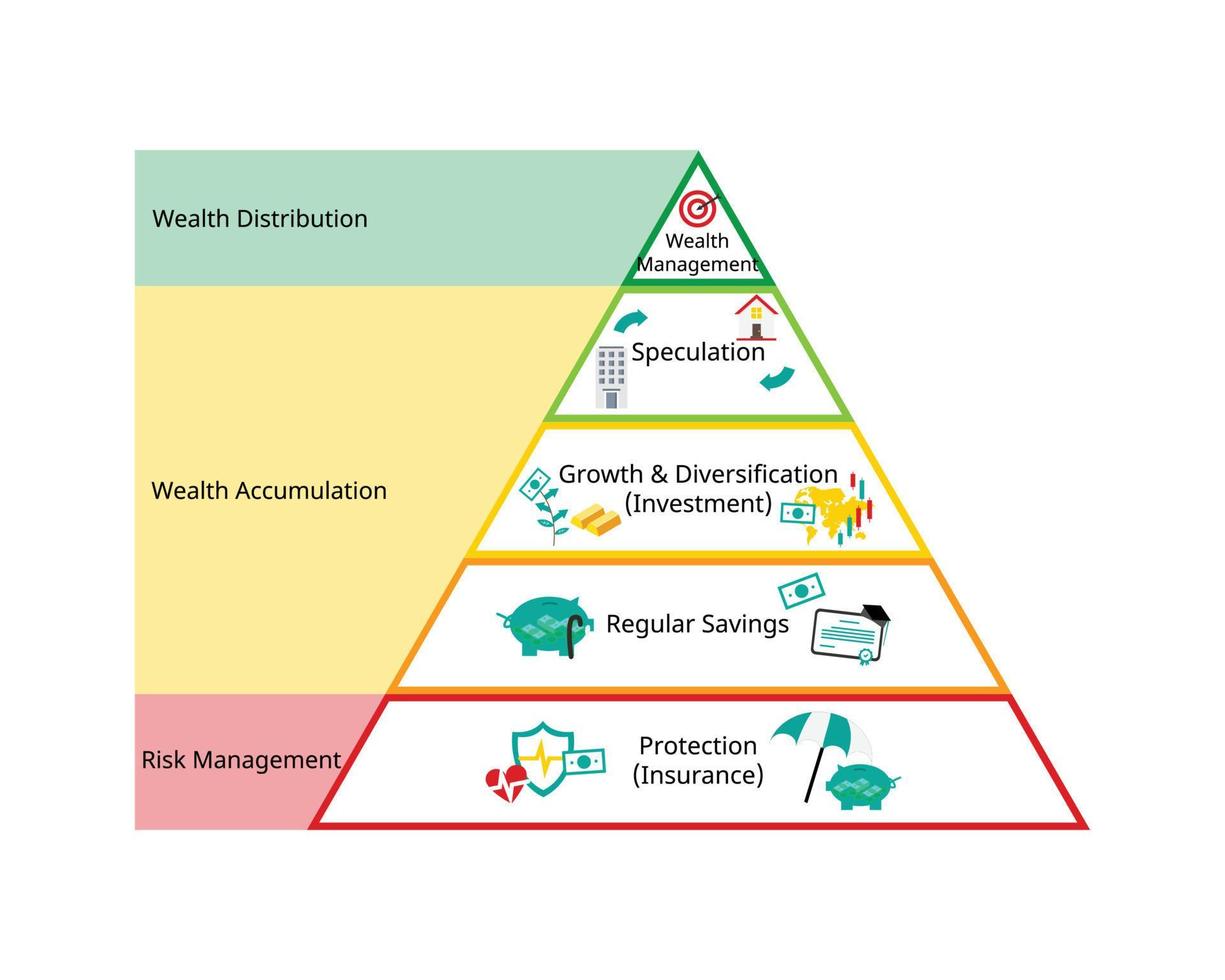
Before deploying a high-value charitable vehicle, a wealth architect must integrate it seamlessly into a comprehensive core estate plan. Philanthropic optimization does not exist in isolation; it operates alongside five interlocking core pillars of wealth preservation, as illustrated in the foundational structural diagram below:



0 Comments